
Jan
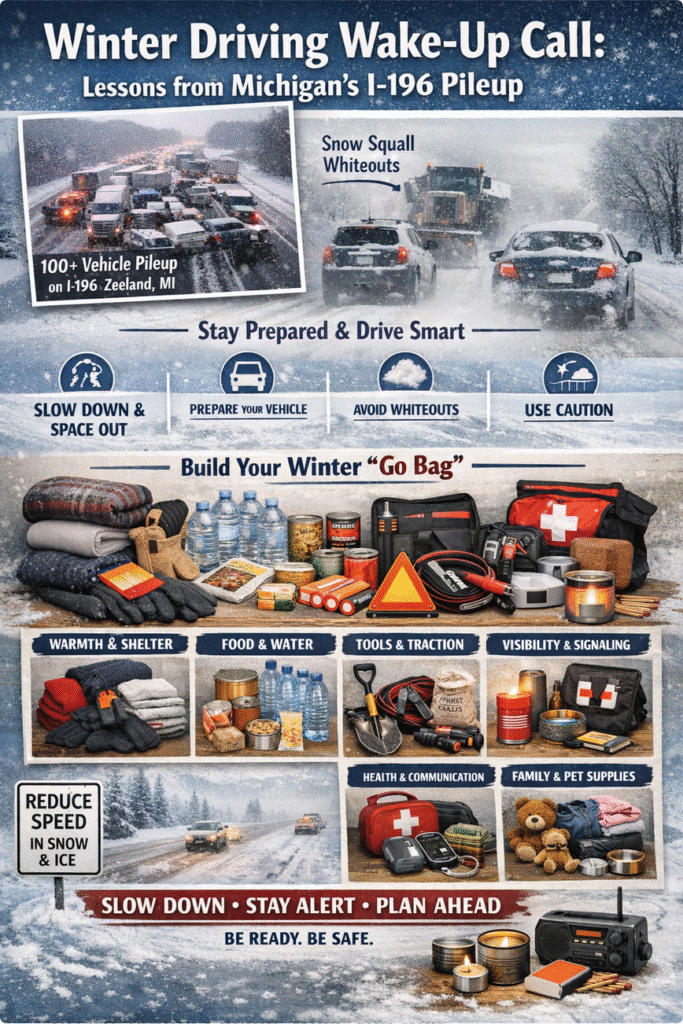
Today’s 100+ vehicle pileup on I-196 in Zeeland Township, Michigan, serves as a reminder of how quickly winter weather can turn deadly. Triggered by sudden snow squall white-outs, The chain-reaction crash involved dozens of semi-trucks and left multiple drivers injured—thankfully, no fatalities. With highways closed for hours and evacuations via school buses, it’s clear that preparation and caution aren’t optional in snowy conditions. As someone who’s seen too many of these stories, let’s break down how to drive smarter this winter and avoid becoming a statistic. Plus, I’ll cover what to pack in your car’s “go bag” for when things go wrong.
Mastering Winter Roads: Top Strategies to Dodge Crashes
Winter driving isn’t just about surviving—it’s about thriving by respecting the elements. Slippery surfaces reduce traction, visibility drops, and stopping distances skyrocket. According to safety experts, lowering your speed by just 10 mph in snow can cut crash risk by 28%. Here’s how to stay safe:
- Slow Down and Space Out: Always reduce speed on slick roads—it’s harder to stop or control your vehicle. Aim for at least 8-10 seconds of following distance (double the usual 3-4 seconds in dry conditions) to give yourself reaction time. Abrupt acceleration or braking? Avoid it; ease on the gas and brakes to prevent skids.
- Prep Your Ride Before You Roll: Check tires for tread (at least 2/32 inch) and proper inflation—cold temps drop pressure, killing grip. Test your battery, as power fades in the freeze, and ensure antifreeze levels are topped off. Clear all snow and ice from windows, mirrors, lights, and the roof—flying debris can blind others.
- Smart Habits on the Go: Ditch cruise control on ice—it’s a skid waiting to happen. Use low beams for visibility, even in daylight, and watch for black ice on bridges and shaded spots, which freeze first. If you skid, steer into it gently without slamming brakes (pump if no ABS, hold steady if you have it). And pro tip: Give snowplows space—they’re slow for a reason, and passing them blindly is risky.
- The Golden Rule: If It’s White-Out, Stay Out: Like today’s Michigan mess, snow squalls can erase visibility in seconds. If advisories are up, delay your trip. No drive is worth the risk.
These proven ways to cut risks. Winter tires alone can shorten stopping distances by 25% on ice. Practice in an empty lot if you’re rusty, and always plan routes with weather
Build Your Winter Go Bag: Essentials for Stranded Situations
Even the best drivers can get stuck—think breakdowns, pileups, or waiting out a storm. A well-stocked emergency kit (or “go bag”) can mean the difference between discomfort and danger. Keep it in the backseat for easy access if the trunk freezes shut. Here’s what every person or family should include, based on expert recommendations:
| Category | Essentials | Why It Matters |
| Warmth & Shelter | Blankets or sleeping bags, extra hats/gloves/mittens, hand warmers, reflective emergency blanket | Hypothermia sets in fast—stay insulated if stranded for hours. |
| Food & Water | High-calorie non-perishable snacks (energy bars, nuts, dried fruit), bottled water (at least a gallon), can opener if needed | Maintain energy and hydration; water won’t freeze if insulated. |
| Tools & Traction | Jumper cables, small shovel, sand/kitty litter for traction, ice scraper/snow brush, multi-tool or knife | Dig out tires, jump a dead battery, or fix minor issues. |
| Visibility & Signaling | Flashlight with extra batteries (or crank-powered), road flares/reflective triangles, whistle, bright cloth for antenna | Signal for help and be seen by rescuers or traffic. |
| Health & Comms | First-aid kit (bandages, meds, antiseptics), cell phone charger/adapter, basic medications | Handle injuries and stay connected—include a portable battery pack. |
| Extras for Families | Extra clothing/boots for all sizes, diapers/wipes if kids are involved, entertainment (books, games) | Keep everyone comfortable; add pet supplies if traveling with animals. |
Don’t forget a battery-powered radio for updates and matches/lighter in a waterproof container for emergency heat (like a coffee can furnace). Tailor it to your needs—diabetics might add glucose, for example. Refresh items seasonally, and if you’re in extreme cold like today’s Michigan event, prioritize warmth over all else.
Winter doesn’t have to be a hazard—respect it, prepare for it, and you’ll navigate it like a pro. Share your own tips in the comments, and drive safe out there! If we all slow down a bit, incidents like today’s could become rare.
Written by RBM
Thank you for the coverage Fox News: https://www.fox2detroit.com/news/watch-100-vehicle-i-196-pileup-michigans-west-side-video-shows-staggering-aftermath
