How To Support Your Parents in Disaster Preparedness
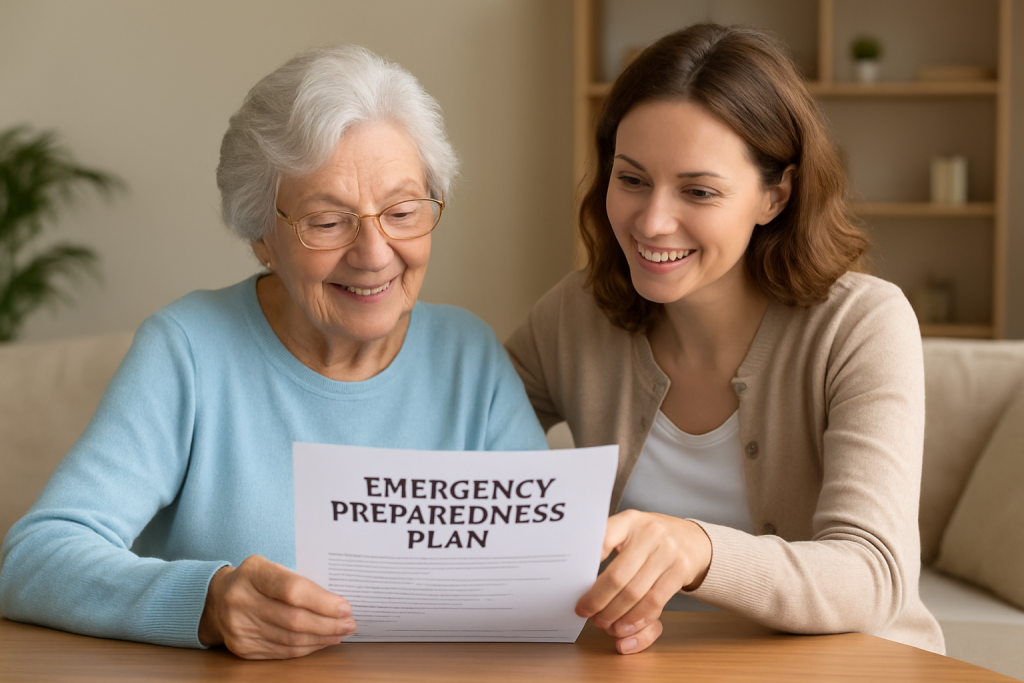
When adult children think about disaster preparedness for aging parents who live alone, the stakes feel different. This isn’t about extra flashlights in the hall closet. It’s about medication timing, mobility aids, memory lapses, and what happens when you live 1,000 miles away and the power goes out.
Supporting an aging parent in disaster preparedness means balancing two truths: they deserve independence, and they may need thoughtful backup systems.
In Short
- Older adults face unique risks in emergencies: medication interruptions, mobility limits, cognitive confusion, and social isolation.
- The most effective support is practical and respectful: simplify plans, build local check-in networks, organize documents, and rehearse evacuation scenarios.
- Focus on systems that work even if you can’t get there quickly.
- Involve your parents in decisions. Preparedness should feel empowering, not like a takeover.
The Often-Overlooked Pieces That Matter Most
Disaster planning for older adults isn’t just “stock up on water.” It’s about the daily realities of aging.
Critical Elements to Address
- Medication continuity
- Keep a current medication list (dosage, prescribing doctor, pharmacy).
- Maintain at least a several-day supply when possible.
- Identify backup pharmacies in nearby towns.
- Plan how medications will be transported during evacuation.
- Mobility aid backups
- Extra cane tips, walker tennis balls, wheelchair repair contacts.
- A lightweight evacuation-friendly mobility device if possible.
- Clear pathways in the home for emergency responders.
- Simplified communication plans
- One primary contact person.
- One backup.
- A written card with phone numbers (not just saved in a cell phone).
- Neighbor and community check-in networks
- At least one neighbor who knows your parents may need assistance.
- Faith community, senior center, or building manager awareness.
- A simple “if you don’t see me, knock” agreement.
- Accessible emergency supplies
- Supplies stored at waist height or under the bed.
- No heavy bins on high shelves.
- Flashlights with large, easy-to-use switches.
- Important document organization
- Copies of ID, insurance cards, medical info, power of attorney.
- Stored in a clearly labeled, easy-to-grab folder.
A Practical Planning Table
| Risk Area | What Could Go Wrong | Simple Fix That Helps Most |
| Medication | Missed doses during evacuation | Printed medication list in emergency folder |
| Mobility | Can’t evacuate quickly | Pre-identified helper + lightweight backup aid |
| Cognitive changes | Confusion under stress | One-page, step-by-step emergency sheet |
| Isolation | No one checks in | Neighbor check-in agreement |
| Communication breakdown | Phone dies or numbers forgotten | Large-print contact card taped near phone |

How to Start the Conversation (Without Taking Over)
This is often the hardest part.
Instead of:
“You need to fix your disaster plan.”
Try:
“If there were a big storm and I couldn’t get to you, what would make you feel safest?”
Conversations worth having before a crisis:
- “Who would you want to call first?”
- “If you had to leave in 10 minutes, what would you grab?”
- “Would you want help from a neighbor if needed?”
- “Where do you keep your important papers?”
Framing the discussion around their preferences preserves dignity and autonomy.
A Step-by-Step Preparedness Checklist
- Gather Information
- Medication list (updated and printed).
- Doctor names and numbers.
- Emergency contacts.
- Walk Through the Home
- Are pathways clear?
- Are supplies accessible?
- Is there a working flashlight in the bedroom?
- Build a Local Support Layer
- Introduce yourself (if possible) to a trusted neighbor.
- Share your contact info.
- Confirm who could help in an evacuation.
- Create a “Grab-and-Go” Folder
- Copies of ID and insurance.
- Medication list.
- Emergency contact card.
- Revisit Twice a Year
- Update medications.
- Replace expired supplies.
- Review the plan together.
Making Plans Visual (Because Simple Works Better)
Many aging parents respond better to visual, printed materials than to long discussions or complicated apps. A large-print emergency contact card taped near the phone. A basic evacuation flowchart on the refrigerator. A medication sheet that includes photos of each pill. A short instruction card for neighbors checking in during a storm.
If you’re not naturally “design-oriented,” tools now make this surprisingly accessible. You can generate graphic designs with Adobe Firefly to create polished, easy-to-read materials from a simple description of what your parent needs. That small step—turning good intentions into tangible, visible resources—often makes preparedness feel real and usable rather than theoretical.
A Trusted Resource Worth Bookmarking
One of the most practical and reliable guides available is from the American Red Cross.
It provides checklists specifically tailored to seniors and caregivers, including mobility, medication, and communication considerations. It’s clear, straightforward, and regularly updated.
FAQ
What if my parents resists planning?
Start small. Focus on one improvement—like organizing medications—rather than a full overhaul. Emphasize independence: “This helps you stay in control.”
How do I prepare from far away?
Build a local support layer. A trusted neighbor, building manager, or nearby friend is often more important than a detailed binder you keep at home.
What about cognitive changes?
Simplify. One-page instructions. Fewer steps. Clear labels. Practice the plan periodically so it feels familiar.
How much is enough?
Preparedness isn’t about perfection. If your parents can access medications, contact help, and evacuate safely if needed, you’ve addressed the core risks.
The Small Steps That Matter Most
Disaster preparedness for aging parents is less about dramatic action and more about respectful systems. You may not be able to prevent every emergency. But you can reduce confusion, preserve dignity, and build quiet layers of protection that make all the difference when something unexpected happens.
#emergencypreparedness #myredfolder #family #ready